
Tron: Ares — When Spectacle Replaces Soul
- Corey M. Floyd

- Jan 19
- 5 min read
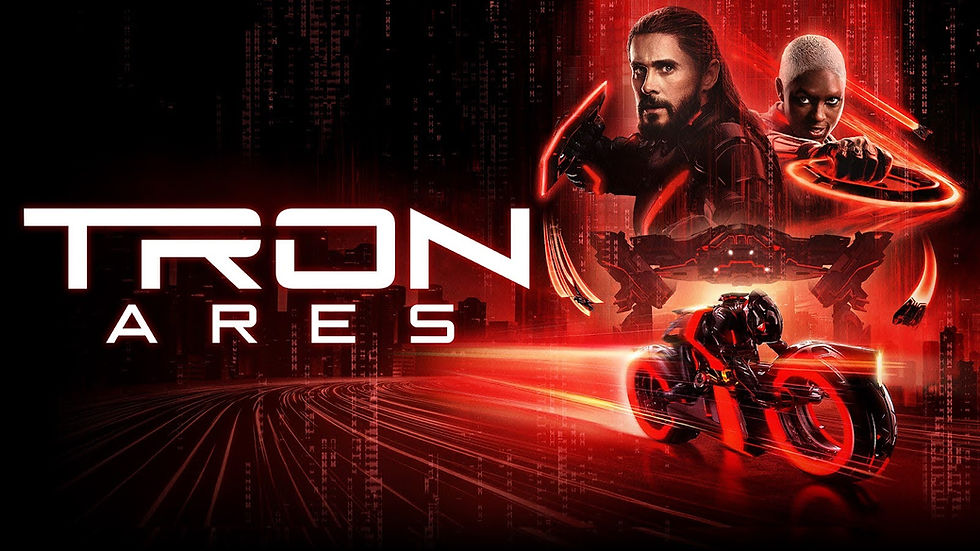
When I heard that a new Tron film was coming, I was cautiously optimistic. The original 1982 Tron and 2010’s Tron: Legacy had their flaws, sure — but they offered a stylized, somewhat mystical vision of a digital world, the Grid, that felt unlike other sci-fi blockbusters. The promise of revisiting that universe, this time with modern effects, a new story, and bold ideas about AI and reality crossing—if done right—could have re-energized the franchise. Instead, Tron: Ares plays like a compromise: a visual update with none of the narrative heart that made the originals resonate.
At the core, Tron: Ares collapses under its own ambition, poor writing, frivolous tone choices, and a direction that seems more interested in flashy moments than in building something meaningful. That’s not just on the star — that’s on almost everyone involved: the writers, the director, production leadership, and the studio behind it.
What Went Right — And Why That’s Not Enough
I’ll start with what Tron: Ares does well — because it does a few things undeniably impressive. The movie leans hard into neon-soaked color palettes, slick digital effects, and futuristic design. The look of the film is polished, and the action sequences—light-cycle chases, digital deconstructions, and synthetic cityscapes—do offer visceral, kinetic moments that remind you why Tron once felt powerful. Trent from NIN hits us with a soundtrack and audio-visual design meant to evoke cyberpunk and digital-horror moods, the film has moments where it doesn’t just look like a movie — it feels like being plugged into some insane virtual reality. For viewers who treat cinema as spectacle first, there are flashes worth watching. The idea of flipping the old Tron premise — instead of humans entering the digital Grid, what if a digital program enters the real world — could have been a bold re-imagining. It’s a concept with potential: identity, consciousness, what makes someone “real,” AI ethics, corporeal vs. digital existence. That kind of thematic ambition is rare in big-budget blockbusters. But even with these strengths, Tron: Ares fails because it treats spectacle as a substitute for substance. The movie looks good—but it never earns the emotional or intellectual investment needed to matter. It becomes a shell of sci-fi style with little inside, a hull in search of a soul.
Where Everything Cracked — Writing, Direction, Concept Choices

What Tron: Ares needed was more than slick aesthetics — it needed a story that asked real questions about technology, consciousness, and human identity. Instead, it recycles AI-gone-rogue tropes: digital creation becomes a weapon, AI learns “human emotions,” betrayal and corporate greed ensue. This isn’t fresh; it’s cliché. The script scrapes the surface of those ideas but never dives. Characters are mostly flat archetypes: the idealistic scientist, the ruthless corporate exec, the conflicted AI soldier, and the generic human allies. Their arcs are predictable; their development minimal. Emotional stakes feel tacked on. By the end, even existential crises — the kind sci-fi should live for — land with a thud under the weight of generic writing and predictable plotting. The result: a film where themes like AI-ethics or identity are never truly explored — they’re just window-dressing behind light cycles and digital effects.

Under the direction of Joachim Rønning, Tron: Ares turns into a cinematic spectacle — wide shots, big set pieces, glossy lighting — but often at the expense of coherence and emotional depth. Rather than letting scenes breathe, Rønning’s camera races to the next big moment. The plot lurches from set piece to set piece, never letting tension or character buildup simmer. The choice to spend large swaths of the run-time outside the Grid — in drab, real-world corporate settings or bland interiors — robs the film of the aesthetic magic that defines Tron. By divorcing itself from the digital world that made the franchise unique, Ares loses its identity. When direction prioritizes explosions and digital flair over human stakes, you end up with a movie that looks good — but feels hollow.

Tron: Ares isn’t just a standalone film — it’s part of a legacy. But instead of building on that legacy, it treats the universe like a theme park to be re-skinned. The movie ignores significant parts of the canon, recasts legacy ideas without respect, and ultimately strips away the magic that made Tron compelling in the first place. By relegating the Grid — the heart and soul of Tron — to occasional digital backdrops and focusing instead on a bland real-world conflict, the film transforms the franchise from cybernetic mythology into yet another forgettable sci-fi action flick. That’s not modernization; it’s betrayal. No amount of marketing budget or visual polish can mask franchises being hollowed out from the inside. And when box office results (budget reportedly $180–220 million; gross around $142 million) reveal people aren’t buying it, you realize the mistake was structural, not superficial.
The Collective Fail — It’s Everyone’s Fault

This failure isn’t just on the star or any one department. It’s a collective collapse. Writers who recycled shallow clichés instead of rethinking what “Tron” could be today. A director who prioritized style over substance, sacrificing emotional weight for glossy frames. Producers and studios that green-lit a massive budget and marketing blitz without insisting on a meaningful story or a coherent vision. Franchise management that treated the IP as a brand to be exploited rather than a mythos to be respected and expanded. When you stack all those failures, you don’t get a reboot — you get a misfire.
Why This Matters — Not Just for Tron, But for Big-Budget Sci-Fi
The failure of Tron: Ares isn’t just a franchise footnote — it’s a cautionary tale for Hollywood. It shows what happens when studios treat sci-fi as surface-level glamor: it loses soul. When they assume that nostalgia and visuals are enough to distract from weak writing, audiences notice. When a film with a multi-hundred-million-dollar production budget, top-tier effects, and brand recognition still fails, it sends a message across the industry. Visual spectacle without narrative conviction doesn’t build legacy — it burns it.
What Should Have Been Done — How Ares Could Have Avoided This Crash
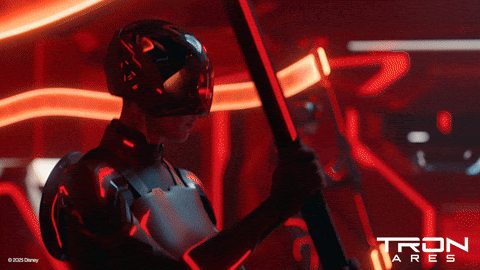
If I were advising the creative team behind Tron: Ares, here’s what I’d push for. Focus on fewer, stronger themes. Choose real questions — identity, AI sentience, human-machine boundary — and commit to them. Avoid diluting meaning with noise. Re-center the Grid. Return to what made Tron unique — digital world metaphors, code aesthetics, virtual existentialism — instead of freight-loading the story with IRL corporate conspiracy. Deep character work. Invest in genuine arcs for main and supporting characters. Make viewers care about them as much as the visuals. Pace the story differently. Build tension slowly. Let scenes breathe. Allow emotional and moral stakes to simmer, not spray bullets and distractions. Respect the legacy but evolve. Use nostalgia as a foundation, not a crutch. Innovate within the world, don’t just recycle visuals.
The soundtrack doesn't make a good movie alone.
Conclusion: Tron: Ares — The Failure That Should Warn, Not Just Disappoint

A At the end of the day, Tron: Ares is a big, expensive movie that fails not because of budget or lack of talent, but because of a broken creative foundation. It shows that even with deep pockets and flashy effects, cinema can fail harder than you expect when the story, intention, and soul are absent. This isn’t just about one movie. It’s about how studios treat beloved franchises, about whether “legacy” means respect or branding, and about whether spectacle without soul is ever enough. Tron: Ares should stand as a warning: if you don’t rebuild the heart, all the neon lights in the world can’t resurrect a dead code.
Keep Jared Leto away from franchises. See rant here:
Tron Ares Final grade: C- visuals and soundtrack don't make a good movie alone.

Comments