
Why We’re Excited to Play The Blood of Dawnwalker
- Braheim Gibbs

- Apr 30
- 7 min read
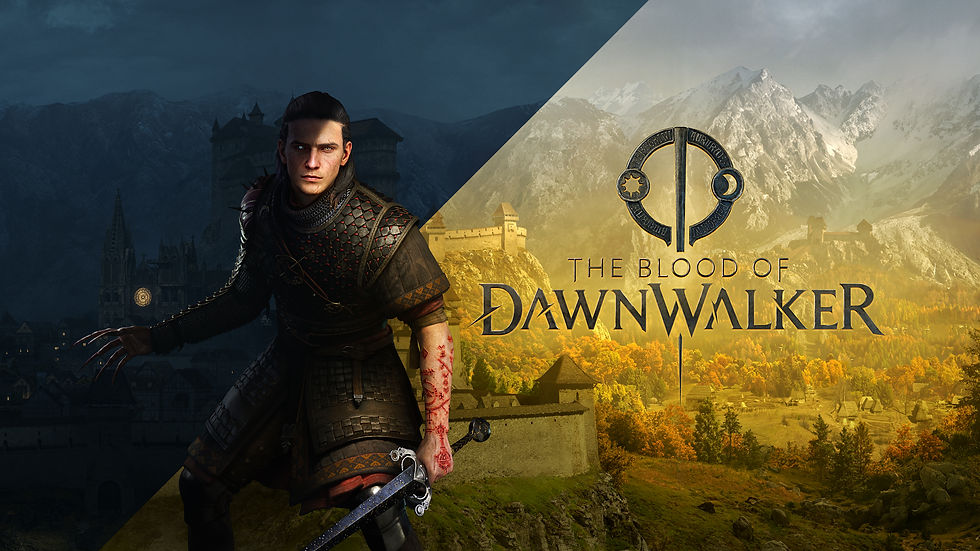
Some games sell themselves with explosions. Some sell themselves with graphics. Blood of the Dawnwalker walked in wearing a vampire cape, carrying medieval trauma, moral choices, monster powers, and former Witcher 3 talent like it knew exactly what kind of RPG players were hungry for.
Rebel Wolves and Bandai Namco’s upcoming dark fantasy action RPG is already one of the most interesting releases on the 2026 calendar. The game is set to launch on September 3, 2026, for PC, PlayStation 5, and Xbox Series X|S, with digital pre-orders now live. The official premise is simple but loaded with potential: players control Coen, a man caught between humanity and vampirism, as he fights to save his family in 14th-century Europe. By day, he is human. By night, he becomes something far more dangerous.
That alone is enough to get our attention. A dark fantasy RPG where the main character literally changes depending on the time of day? Yes, please. That sounds like the kind of game where every quest can go sideways in the best possible way.

A Dark Fantasy RPG With Real Bite
The vampire genre has been around forever, but games do not always know what to do with it. Sometimes vampires become stylish action figures with fangs. Sometimes they become brooding romance bait. Sometimes the game forgets the horror, danger, and temptation that make vampires compelling in the first place.
Blood of the Dawnwalker looks like it understands the assignment.
The official description calls it an open-world dark fantasy action RPG set in 14th-century Europe, where Coen must navigate a world shaped by fear, power, blood, and survival. That setting matters. Medieval Europe already gives the game a grimy foundation: disease, class oppression, religious fear, superstition, brutal politics, and violence sitting around every corner. Add vampires to that world, and suddenly every castle, village, forest path, and locked door feels like it could be hiding something nasty.
This is the kind of setting that can make exploration feel dangerous without needing to throw enemies at you every thirty seconds. The mood is already doing half the work.
The Day and Night System Could Be the Game’s Secret Weapon
The most exciting part of The Blood of Dawnwalker is the dual gameplay loop. According to Bandai Namco, players will experience two different gameplay styles depending on whether Coen is operating by day or night. Each side gives him different abilities, different ways to solve problems, and different ways to approach the world.
That is the kind of idea that can make an RPG feel fresh.
During the day, Coen appears to lean more into his human side. At night, his vampiric abilities come into play. Based on official gameplay coverage, the game has shown combat, magic, traversal, and quest footage, including over 15 minutes of gameplay revealed during the 2025 showcase.
This could make player choice feel more physical and strategic. Do you approach a mission during the day when you may have fewer supernatural tools but less suspicion? Do you wait until night and unleash the monster? Do NPCs react differently based on what you are becoming? Does the world become more dangerous after dark, or does Coen become the danger?
That is where the hype lives.
The best RPG mechanics are not just systems. They create stories. If Blood of the Dawnwalker fully commits to this day-and-night structure, every decision could carry extra weight. Time of day would become more than lighting. It would become a tactical choice, a roleplaying choice, and possibly a moral one.

Former Witcher 3 Talent Raises the Stakes
One of the biggest reasons people are watching Blood of the Dawnwalker is the team behind it. Rebel Wolves was founded by developers with major experience on games like The Witcher 3 and Cyberpunk 2077, including Konrad Tomaszkiewicz, who directed The Witcher 3: Wild Hunt.
Now, let’s be clear. Former Witcher developers being involved does not automatically guarantee greatness. That is an assumption gamers make too quickly. A legendary résumé can get people interested, but the new game still has to stand on its own. We have seen plenty of “from the creators of” projects come out looking like they spent more time saying the magic words than building the magic. That said, this connection matters because The Witcher 3 is still one of the strongest examples of quest design in modern RPGs. Its best stories were not just about killing monsters. They were about choices, consequences, ugly compromises, and realizing too late that the clean answer never existed.
If Rebel Wolves brings that same narrative philosophy into a vampire-driven medieval world, Blood of the Dawnwalker could hit hard.
Coen Sounds Like More Than a Generic Chosen One
The protagonist, Coen, is not being presented as a clean hero riding into battle with destiny music playing behind him. He is cursed, divided, and desperate to save his family. That family motivation gives the story a grounded emotional hook. Saving the world is fine, but saving your people often hits harder because the stakes feel personal.
The official site describes the story as shaped by player actions and the secrets players uncover. That is the kind of language RPG fans love, but it also comes with pressure. “Your choices matter” has been used so much in marketing that gamers now treat it like a suspicious man in a trench coat. We have heard that line before, beloved.
The question is whether the game actually delivers consequences that change more than dialogue flavor.
Can we fail people? Can we save one person and doom another? Can our vampire choices make Coen stronger but less trusted? Can being a monster become easier than staying human?
That's the good stuff. That is where a dark fantasy RPG earns its bloodstains.
The World Feels Built for Moral Conflict
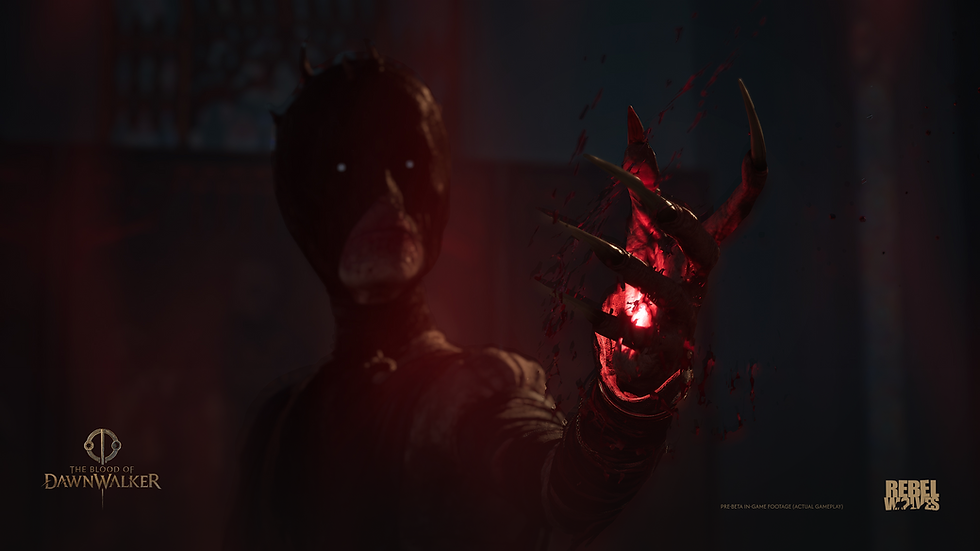
The official tagline, “The world needs what it fears,” is a strong summary of the game’s central tension. Coen may be cursed, but his curse may also be the only thing powerful enough to fight the monsters controlling the world.
That creates an excellent fantasy dilemma. Society fears the monster, but the monster may be the weapon society needs.
We have seen versions of that idea before in comics, anime, and games. Think of characters who carry dangerous power and spend the whole story deciding whether that power defines them. What makes Blood of the Dawnwalker interesting is how naturally that theme fits into gameplay. If Coen’s vampire side gives players access to stronger abilities, faster movement, and more brutal combat options, then the temptation becomes mechanical.
The player is not just watching Coen struggle with power. The player is tempted by it too.
That is smart design if the game sticks the landing.

The Combat Could Have Personality
A lot of action RPGs look pretty until you actually get your hands on them. Then you realize the swordplay feels like swinging a wet broom in a haunted hallway. Blood of the Dawnwalker still has to prove itself, but what has been shown so far suggests Rebel Wolves wants combat to reflect Coen’s split nature.
Bandai Namco has emphasized distinct day and night approaches, while Rebel Wolves has showcased combat, magic, and traversal in official gameplay footage. That combination matters because vampire gameplay should feel different. If Coen moves the same as every other RPG hero, the fantasy loses power.
At night, players should feel faster, meaner, stranger, and more dangerous. Traversal should feel supernatural. Combat should feel predatory. The best version of this game lets us feel the difference between surviving as a man and hunting as a creature of the night.
That is the line the game has to walk.
The Open World Has to Be More Than Pretty Fog
Here is the skeptic’s corner: open-world dark fantasy games are risky.
A moody world with castles, forests, villages, and gothic lighting can look amazing in trailers, but open worlds live or die by what players actually find. If the map is stuffed with repetitive icons, predictable bandit camps, and fetch quests wearing vampire makeup, the excitement will fade fast.
Blood of the Dawnwalker needs meaningful discovery. It needs villages with secrets, characters with hidden agendas, monsters with history, and quests that reward curiosity. The world cannot just look cursed. It has to feel lived in, broken, and dangerous.
The good news is that the game is being positioned around narrative choice and different approaches to goals, which suggests Rebel Wolves knows players want more than a checklist. The challenge is execution. RPG fans are not starving for big maps. They are starving for worlds worth remembering.

Why This Could Be One of 2026’s Biggest RPGs
The 2026 gaming calendar is already crowded, but Blood of the Dawnwalker has a clear identity. It is not just another fantasy RPG with swords and monsters. It has a strong hook, a recognizable mood, a morally loaded protagonist, and a gameplay concept that could make every quest feel different depending on when and how players approach it.
It also has the advantage of being a new IP. That is exciting. No decades of lore homework. No numbered sequel baggage. No need to pretend you remember what happened in a side quest from 2013. Players can step into this world fresh and judge it on its own terms.
That also means Rebel Wolves has something to prove. The studio is asking players to trust a new world, a new hero, and a new fantasy universe. The former Witcher connection opens the door, but Blood of the Dawnwalker has to walk through it with confidence.
Final Thoughts
We are excited to play Blood of the Dawnwalker because it looks like the kind of RPG that understands why dark fantasy works. Not just because it has blood, monsters, and pretty shadows, but because it seems built around conflict: human versus vampire, family versus survival, power versus morality, fear versus necessity.
Coen’s split identity could give the game a strong emotional center and a gameplay system that actually supports the story. The day-and-night structure has the potential to make quests feel flexible, tense, and personal. The medieval vampire setting gives the world atmosphere before the first sword is even drawn.
Now the game has to deliver.
Because if Blood of the Dawnwalker truly gives us meaningful choices, dangerous power, and a world that reacts to what we become, this could be one of the RPGs people are still arguing about long after 2026 ends.
And honestly? A vampire RPG where we can save our family, stalk the night, and possibly make terrible decisions in a castle full of doomed people?
Yeah. We’re seated.


Comments