
Static Shock! Why Virgil Hawkins Still Matters 25 Years Later
- Corey M. Floyd

- Oct 7
- 5 min read

When people discuss early 2000s cartoons that left a lasting cultural mark, you usually hear about the big franchises first: Justice League, Teen Titans, and X-Men: Evolution. But nestled right there in the WB Kids lineup was Static Shock—the story of Virgil Hawkins, a teenager from Dakota City who gains electricity-based powers after an event known as the “Big Bang.” On paper, it could’ve been just another spandex-wearing superhero cartoon. In practice, Static Shock became something greater: a show that spoke to Black youth in ways few mainstream cartoons dared, while also delivering sharp writing, compelling villains, and themes that still resonate two decades later. That’s why Static Shock is still celebrated—not just as a fun superhero romp, but as a groundbreaking series that fused action, humor, and social commentary at a time when kids’ cartoons rarely tackled real-world issues.

Let’s start with the obvious: Virgil Hawkins was one of the first Black superheroes that many kids ever saw headlining their ownanimated series. This wasn’t a side character tagging along with Batman, or the “Black best friend” who appeared in a few episodes for diversity points. Virgil was the star, the kid you rooted for, the hero who carried the show on his shoulders.
For a generation of Black kids, Static Shock was proof that we could be superheroes too—not just sidekicks or background characters. Virgil wasn’t defined by stereotypes; he was smart, funny, awkward, sometimes insecure, and always trying to balance his double life. He cracked jokes while zipping through the city on an electrically charged manhole cover, but he also struggled with grades, friendships, and family responsibilities. In other words, he was relatable. Representation like this mattered deeply in 2000, and it still matters today. While mainstream media has made strides since then, you can draw a direct line from Static Shock to the broader push for diversity in superhero stories—from Miles Morales in Into the Spider-Verse to Black Lightning’s resurgence on the CW.

The supporting characters of Static Shock also gave the show staying power. Virgil’s best friend, Richie Foley, wasn’t just comic relief; he became the superhero Gear, a tech-based partner who showed how brains could stand alongside brawn. Virgil’s family—especially his father, Robert Hawkins—brought gravity to the show. Robert wasn’t some absentee parent like many cartoon parents; he was a community leader, a widower trying to raise two kids, and a voice of moral guidance that grounded Virgil’s more impulsive tendencies.
The villains—many of whom were other “Bang Babies” affected by the same mutagenic event as Virgil—were more than cookie-cutter bad guys. Characters like Ebon, Hotstreak, or Talon reflected different aspects of systemic issues: gang culture, peer pressure, and discrimination. You didn’t always like them, but you could understand them. And when Static fought them, it wasn’t just superhero vs. villain—it was often friend vs. friend, or teen vs. environment. That nuance is part of what made the show stick.
Here’s where Static Shock went from good to unforgettable: it didn’t shy away from tough conversations. While most cartoons in the early 2000s were busy teaching you to eat your vegetables or recycle, Static Shock was talking about racism, gun violence, homelessness, and even HIV stigma.

The Racism Episode (“Sons of the Fathers”): When Virgil’s white best friend, Richie, invites him over, Richie’s dad reveals himself as a racist. For a Saturday morning cartoon, this was explosive. Virgil didn’t just shrug it off—the episode forced Richie to confront the reality of prejudice in his own home. For countless kids, this was the first time a cartoon explicitly named racism as a problem that still existed.

Gun Violence (“Jimmy”): In one of the show’s boldest moves, a classmate brings a gun to school after being bullied. The episode pulls no punches: Jimmy nearly kills himself by accident, and the trauma reverberates through the characters. It wasn’t just a “very special episode”—it was a wake-up call at a time when school shootings were becoming an all-too-familiar reality.

Homelessness & Poverty: Through characters like Madelyn “Permafrost,” a homeless Bang Baby whose powers symbolized her isolation, the show spotlighted issues many kids might not have even realized were happening in their cities.

HIV Awareness: The episode “She-Back!” introduces Virgil’s friend Frieda, whose cousin has HIV. Instead of shying away, the show used Static to challenge the stigma and ignorance surrounding the disease. Few cartoons before—or since—have balanced superhero action with this kind of social responsibility.

Another reason Static Shock endures is its cultural authenticity. Virgil wasn’t written as a stereotype; he was a fully realized character who happened to be Black. The dialogue, the music, the way he interacted with his friends and family—it felt real. The show wove in slang, cultural references, and humor that hit differently than the generic banter in other superhero cartoons. And Virgil was funny. His wisecracks weren’t just filler—they were coping mechanisms, reflections of his teenage awkwardness, and a way to remind viewers that even with powers, he was still a kid. That sense of humor kept the show from getting bogged down in its heavier themes and made the character deeply lovable.

Today, Static Shock still gets referenced in discussions about superhero media. Fans constantly ask for reboots or live-action adaptations. Cosplayers still bring Virgil to conventions. The fact that a cartoon that ran for only four seasons (2000–2004) still inspires such passion shows how strong its impact was.
Part of that legacy is thanks to the character’s comic book roots. Created by Dwayne McDuffie, Michael Davis, Derek T. Dingle, and Denys Cowan under Milestone Media, Static was always intended to broaden the scope of representation in comics. The cartoon carried that mission into Saturday morning television, introducing a new generation to what inclusivity could look like in genre storytelling.
Even the DCAU (DC Animated Universe) embraced him: Static appeared alongside Batman, Superman, and the Justice League, cementing his place as a peer among legends. For a kid watching at the time, seeing Static team up with Batman wasn’t just cool—it was validation. He belonged.

In 2025, we live in an era of endless superhero content. Some of it feels shallow, mass-produced, algorithmic. But Static Shockstill feels fresh because it had heart. It wasn’t trying to sell toys (though it did). It wasn’t pandering. It was telling honest, character-driven stories through the lens of a Black teen superhero in a world that often ignored voices like his.The show also anticipated conversations that dominate headlines today: systemic racism, gun control, healthcare stigma, police accountability, and the mental health of young people. When fans revisit the series, it doesn’t feel dated—it feels prophetic. And in a landscape where diversity is still debated in fandom spaces, Static Shock stands as proof that authentic representation is not only important but successful. The show didn’t just survive—it thrived.
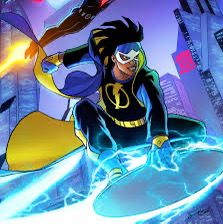
At its core, Static Shock is celebrated because it combined what kids wanted—action, humor, a relatable teen hero—with what society needed: conversations about race, class, violence, and compassion. Virgil Hawkins wasn’t just zapping bad guys; he was navigating the minefields of adolescence while showing kids of color that their stories were worth telling. Two decades later, the sparks from Static Shock are still felt. Fans continue to clamor for reboots, and new generations discover the show through streaming. What they find isn’t just nostalgia—it’s a blueprint for how superhero media can be both entertaining and meaningful. In a world that still struggles with the very issues Virgil confronted, his story remains electrifying (YES I MADE A PUN). Because Static Shock wasn’t just a cartoon—it was a statement. And that statement still resonates: heroes come in all colors, all backgrounds, and sometimes they ride manhole covers through the sky with a grin that makes you believe in them



Comments