
Lanterns Review: Aaron Pierre’s John Stewart Deserves More Than a “Prove Yourself” Story
- Braheim Gibbs

- 14 hours ago
- 5 min read

For an entire generation of DC fans, John Stewart was Green Lantern.
Not the backup Green Lantern. Not the Black Green Lantern. Not the guy who stepped in when Hal Jordan was unavailable. If you grew up watching Justice League and Justice League Unlimited, John Stewart was simply the man wearing the ring. He stood beside Batman, Superman, Wonder Woman, Hawkgirl, Flash and Martian Manhunter without needing an explanation for why he belonged there.
That makes HBO's Lanterns a bigger deal than another entry in James Gunn and Peter Safran's growing DC Universe.
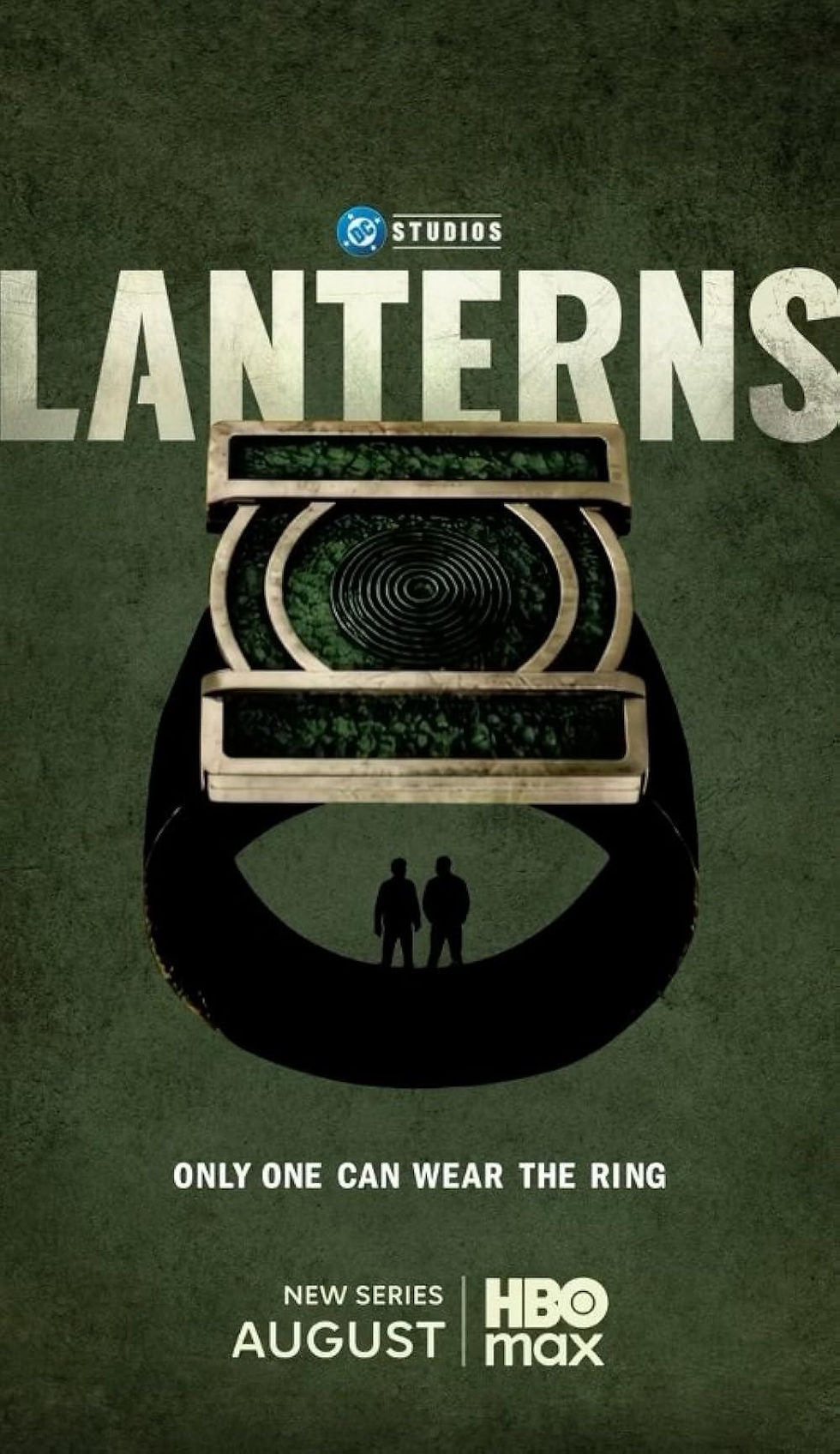
Aaron Pierre is bringing John Stewart into live action in a major role for the first time, more than 50 years after the character debuted in Green Lantern #87 in 1971. Pierre stars opposite Kyle Chandler's Hal Jordan in an eight-episode series that trades much of Green Lantern's usual cosmic spectacle for something darker, slower and more grounded. Lanterns is part superhero story, part murder mystery and part character drama, with obvious DNA from shows like True Detective.
After one episode, however, declaring that DC has finally "gotten John Stewart right" would be premature.
The more interesting question is whether Lanterns actually understands what makes John Stewart compelling in the first place.
John Stewart Doesn't Need to Prove He Belongs
One of the easiest traps for Hollywood to fall into when writing Black characters is turning their entire journey into a story about earning permission.
They have to work harder. Be smarter. Stay calmer. Prove themselves. Overcome somebody else's assumptions. Demonstrate that they deserve the position, opportunity, uniform or power that another character gets to occupy without nearly as much scrutiny.
John Stewart has certainly dealt with race throughout his comic history, and pretending that his identity has nothing to do with his worldview would be equally dishonest. But John Stewart has never been interesting simply because he is a Black man overcoming racism.
He's interesting because he's John Stewart.
He's disciplined, stubborn, intelligent and incredibly self-assured. He's an architect and a former Marine. He has a strong moral compass, but that doesn't mean he always makes the right decision. He can carry tremendous responsibility while simultaneously carrying tremendous guilt. At his best, John feels like someone who could command an army one minute and question every decision that brought him there the next.
That complexity is exactly what Lanterns needs to protect.
The premiere establishes John as a newer Lantern operating beside an older, more experienced Hal Jordan. Their relationship immediately gives the series fertile ground for conflict. Hal has the experience and reputation. John has the potential to replace him. That naturally creates friction between two men who approach the responsibility of being Green Lantern very differently. The danger is obvious.
If John's entire story becomes convincing Hal, the Green Lantern Corps, or the audience that he's worthy of the ring, Lanterns will have taken one of DC's most respected heroes and placed him inside one of television's most familiar boxes.
John Stewart does not need Lanterns to convince us that he deserves to be Green Lantern.
The show needs to convince us that it knows who John Stewart is when he isn't proving something to somebody else.

Aaron Pierre Already Looks Like the Right Choice
Fortunately, Aaron Pierre gives the series a major advantage.
Pierre has the physical presence necessary for John without playing him like a walking brick wall. There is restraint in his performance. He can communicate irritation, confidence or suspicion without turning every emotional beat into a speech. That matters because John Stewart has always worked best when strength isn't confused with loudness.
The premiere frequently places John against Chandler's Hal, whose experience has curdled into arrogance, territorial behavior and cynicism. That contrast works because Pierre doesn't attempt to out-gruff Chandler. John watches. He evaluates. He pushes back when necessary. He has confidence without acting like he already knows everything.
Entertainment Weekly reported that the creative team understood the pressure surrounding John's live-action debut, while Pierre approached the character by researching both his history and the qualities that made him resonate with audiences beyond the comics.
That's encouraging.
But casting someone capable of playing John Stewart and actually writing John Stewart are two different victories.
Let John Be Messy
Representation conversations sometimes create another strange problem.
A character becomes so important symbolically that writers become afraid to let them be human.
John Stewart doesn't need to represent every Black man watching Lanterns. He doesn't need to make the correct decision every episode. He doesn't need to constantly demonstrate exceptional discipline or become the emotionally mature counterweight to everybody else's dysfunction.
Let the man screw up.
Let him be petty sometimes.
Let him make a decision because his ego got involved. Let him misread someone. Let him get angry when anger isn't strategically useful. Let him want something completely unrelated to saving the world or carrying the expectations placed on him.
Most importantly, give John relationships and motivations that exist outside Hal Jordan.
The premiere already positions the two Lanterns as the engine of the series, and that relationship should absolutely matter. But John Stewart cannot become interesting only in relation to Hal. If Hal is constantly the mentor, measuring stick, obstacle and emotional center of John's development, then John may technically have the spotlight while still orbiting someone else's story.
That would be a particularly frustrating mistake considering how long audiences have waited for him.
The Grounded Approach Could Help or Hurt Him
Lanterns also makes one creative choice that may ultimately determine whether John receives the depth he deserves. This show is surprisingly grounded. Instead of immediately throwing audiences across galaxies filled with bizarre aliens and massive constructs, the series leans heavily into crime drama. Hal and John are investigators as much as superheroes, and much of the story is rooted in an Earth-based mystery.
Critics have already divided over that decision. Some have praised the character-focused approach and performances, while others argue that sanding down Green Lantern's cosmic weirdness leaves the show feeling smaller than the mythology should. For John Stewart, however, that restraint could actually become an advantage.
A slower story gives the series room to examine who he is underneath the uniform. John has always been a character whose internal battles can be just as important as the monsters he fights. A detective story provides opportunities for observation, judgment, compromise, and moral disagreement that another giant CGI battle wouldn't necessarily provide. But prestige television has its own collection of clichés. Trauma doesn't automatically equal depth. Quiet doesn't automatically equal complexity.
And putting a superhero in a dusty town while everybody speaks in serious voices doesn't automatically transform a comic-book adaptation into True Detective.
If Lanterns wants to strip away some of Green Lantern's spectacle, it needs to replace that spectacle with something equally valuable.
Character.
This Is Only Episode One
That's also why we're not handing down a verdict yet. One episode isn't enough.
There is an understandable temptation whenever a new superhero project premieres to immediately announce that a studio is saved, doomed, cooking, washed, or whatever term social media has collectively selected that week.
We're good.
Lanterns has eight episodes to tell its story, and judging John Stewart's entire characterization from the opening chapter would be unfair to both the series and the character. The season is scheduled to continue weekly on HBO and HBO Max through October 4.
What the premiere has done is establish an intriguing foundation.
Aaron Pierre feels comfortable in the role. His chemistry with Kyle Chandler creates immediate tension. The decision to treat Green Lantern like a serious crime drama is strange enough to be interesting, even if we're not convinced yet that grounding one of DC's most cosmic franchises is automatically an improvement.
Most importantly, John Stewart finally has room.
Now Lanterns has to decide what to do with it.
Because putting John Stewart at the center of a television series is historic, but simply giving him screen time isn't enough. Fans have already spent decades watching versions of John that proved why the character belongs alongside DC's greatest heroes.
We don't need another story explaining why he deserves the ring.
Show us the man wearing it.


Comments